
Photo by Look Studio · Unsplash
When I was working at a Korean beauty shop in Vancouver, customers pulled up photos on their phones all the time — a Korean celebrity or influencer with that glowy, “glass skin” look — and asked, “How do I get this?”
The first thing I always told them was this: glass skin isn’t something makeup creates on its own. It’s half skin prep (skincare), half soft, subtle glow makeup. You need a thin layer of glow sitting on top of hydrated, healthy-looking skin to get that “glass-like” finish — applying too much highlighter to dry skin can make the finish look patchy or greasy instead. So today I want to walk through both halves of Korean glass skin makeup, plus a few tricks from the shop floor.
Real Korean Glass Skin Makeup Starts With Your Skin
That clear, dewy, luminous look you see so often in K-beauty is one of the signature styles of glass skin makeup. And glass skin has a lot less to do with how much highlighter you pile on than with the state of your skin before makeup and a thin, well-blended base.
- Take care of your skin barrier — if your barrier is compromised, dry, or irritated, your base can lift or sit unevenly instead of blending smoothly. (See my post on repairing a damaged skin barrier.)
- Hydrate properly — skin that’s too dry makes your base grab and separate, so hydrate according to your skin’s needs before you start makeup. (For more on hydrating ingredients, see my snail mucin post.)
- Keep texture smooth — keeping surface texture smooth can help your base go on more evenly. If you exfoliate, choose a method that suits your skin and avoid strong exfoliation right before makeup. (See my exfoliation guide.)
- Wear SPF — the foundation for keeping your tone clear. (See my Korean sunscreen guide.)
In other words, well-maintained everyday skin is the real prep work behind Korean glass skin makeup.
⭐ Prepping Your Skin Right Before Makeup (Tips From the Shop Floor)
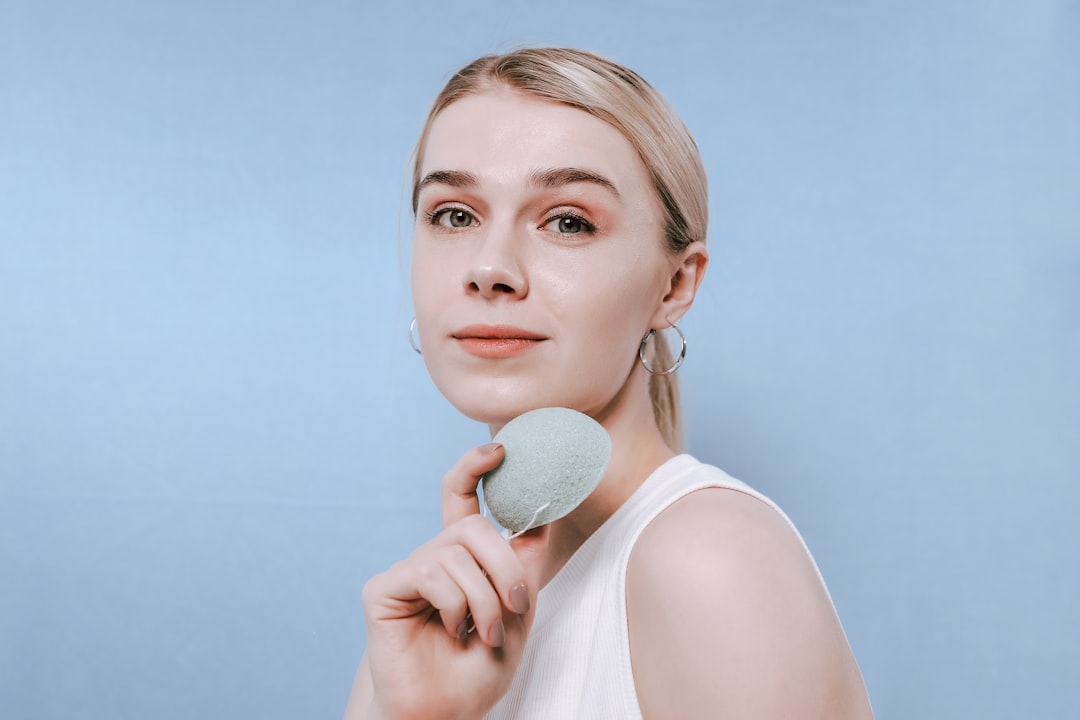
Photo by Wenny Chen · Unsplash
On days when your skin looks dull or feels dry, taking a minute to prep it before makeup makes your base go on so much better. Here’s what I told customers most often at the counter.
- Use a multi-balm — add it as the last step of your skincare routine for extra glow, or dab a little onto the spots where you want glow after moisturizing.
- A quick toner-pad hydration boost — if your skin feels dry before makeup, a hydrating toner pad can help, used the way the product directs. Just don’t leave pads containing exfoliating or potentially irritating ingredients sitting on your skin right before makeup.
- Skincare should be “the right amount,” not “a lot” — layering on too much product can make your base slide or lift. Let your skincare fully absorb before you start, so your skin isn’t overly slippery when you begin your base.
The key is prepping your skin before the base goes on — that’s what lets the glow on top look natural instead of forced.
⭐ Building a Glass Skin Base, Step by Step
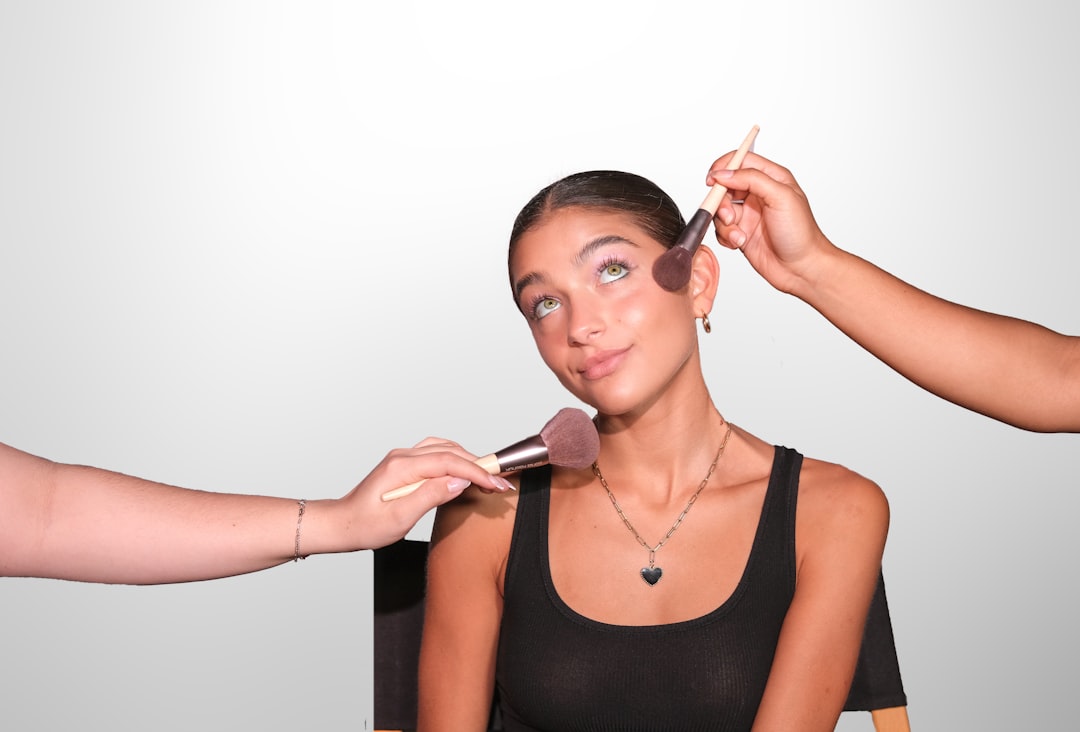
Photo by Lauren Greene · Unsplash
This is where the actual makeup application comes in. Here’s how to build a base for Korean glass skin makeup.
- Use different primers by zone — a mattifying primer on the T-zone, where shine tends to build up, and a hydrating or luminizing primer on the cheeks and outer face keeps the glow while cutting down on breakdown.
- Go light on your base — skip heavy, full-coverage foundation or matte powder in favor of lighter formulas like a tone-up cushion, tinted moisturizer, or serum foundation. Your skin’s natural texture and light need to show through for glass skin to work.
- Press, don’t rub — use a puff or a damp sponge to press product in thin layers instead of rubbing it in. Rubbing causes patchiness, and applying too much product thickly kills the glass-skin effect and just looks heavy.
- Mix a tiny bit of liquid highlighter into your base — if you want, blend a very small amount of liquid highlighter into your base product for a subtle glow. Start with a small amount and test it, and consider applying it mainly where you want the glow rather than all over your face.
- Cream blush for color — cream or liquid blush pairs with a dewy glow much better than powder blush does.
⭐ Adjusting Glass Skin Makeup for Your Skin Type
The same glass-skin look needs to be adjusted for your skin type to look truly natural.
- Dry skin → focus on hydration and a creamy base, and keep powder to a minimum.
- Combination skin → play up the glow on drier areas like the cheeks, and lightly set the T-zone with powder.
- Oily skin → instead of glow all over your face, use a small amount of highlighter on specific spots, like the cheekbones.
- Pore-prominent skin → rather than applying a strongly luminous product broadly over areas with visible pores, use it as more of an accent on smoother areas of skin.
⭐ Highlighter Goes in the Exact Right Spots
This is the finishing touch of glass skin. But highlighter in the wrong places just looks greasy — the key is placing a small amount only on the “high points” where light naturally hits your face.
- Upper cheekbones — tap a small amount of liquid or cream highlighter onto the areas of your face that naturally catch light.
- Bridge of the nose — a small amount just on the bridge looks more natural than spreading it out to the tip or sides of the nose.
- Inner corners of the eyes — a very small amount here brightens the eye area. Just be careful not to apply it directly to the inner corner of the eye itself.
- Center of the upper lip (cupid’s bow) — a light tap on the dip above your lip makes your lips look fuller and fresher. (An easy spot to forget.)
- Center of the forehead — a very small amount, kept narrow.
💡 Cream and liquid formulas can work especially well for a glass-skin look, and it’s best to build up in small amounts. Use a fan brush or your fingers to apply it thin — a powder highlighter with large shimmer particles applied broadly will leave you looking caked instead of glowy.
Powder Only Where You Need It — “Micro-Dusting”
With Korean glass skin makeup, powder should go only where you need it, not all over your face. Lightly set the T-zone, and leave the areas where you want glow as untouched as possible.
- Using a small brush, apply a small amount of powder only to spots where makeup tends to move, like beside the nostrils, between the brows, the nasolabial folds, and the chin. (Applying just a tiny amount of powder to targeted spots like this is what I’d call “micro-dusting.”)
- Keep the areas where you want glow — cheekbones and the bridge of the nose — dewy and untouched.
- Finish with a light mist of setting spray, used according to the product’s directions, to help pull the whole look together.
If Your Glass Skin Makeup Keeps Breaking Down
If you keep layering on skincare and glow products to try to keep your glass skin look going, it can actually make your base slide even more.
- Applying too much skincare
- Applying your base too thick
- Using too much glow product across the T-zone
- Over-layering powder and cream products
If this is happening to you, it’s worth checking whether you can simply cut back on how much product you’re using, rather than adding more.
Glass Skin Isn’t Always the Right Answer
- If you have oily skin, or it’s a humid summer day, an all-over glow can end up looking greasy instead of dewy. In that case, a partial glass-skin look — a more matte T-zone with dewy cheeks — may look more balanced and natural.
- Glass skin isn’t just about making your whole face shiny. When your skin’s natural oil and highlighter overlap too much, it reads as greasy rather than dewy. The difference comes down to skin prep, and using small amounts in exact spots.
- Glass skin isn’t about poreless, flawless skin — it’s the subtle glow that comes from skin that’s healthy and hydrated. Rather than trying to recreate a photo 100%, it looks much better when you adapt the look to your own skin.
A Simple Korean Glass Skin Makeup Routine
If you want the whole thing in order, here’s a simple way to put it all together:
- Prep — hydrate without over-layering skincare.
- Prime — use a mattifying primer only where you need oil control, and a hydrating or luminous primer where you want glow.
- Base — apply a thin layer of lightweight foundation, cushion, or tinted moisturizer.
- Add color — use a cream or liquid blush for a fresh finish.
- Highlight — add a small amount of cream or liquid highlighter to the high points of the face.
- Set — lightly powder only the areas where makeup tends to move or become oily.
- Finish — use setting spray according to the product’s directions, if desired.
Final Thoughts
Korean glass skin makeup really comes down to two things — keeping your skin hydrated and healthy day to day, and layering a soft glow in exact spots on top of it, thinly. Think of it less as “building” glow with heavy coverage and more as “reflecting” the light off skin that’s already well prepped. Approach it that way, and the glass-skin effect comes together far more naturally.
This article is for general informational purposes. Results from cosmetics and makeup can vary from person to person. Stop use if you experience irritation.