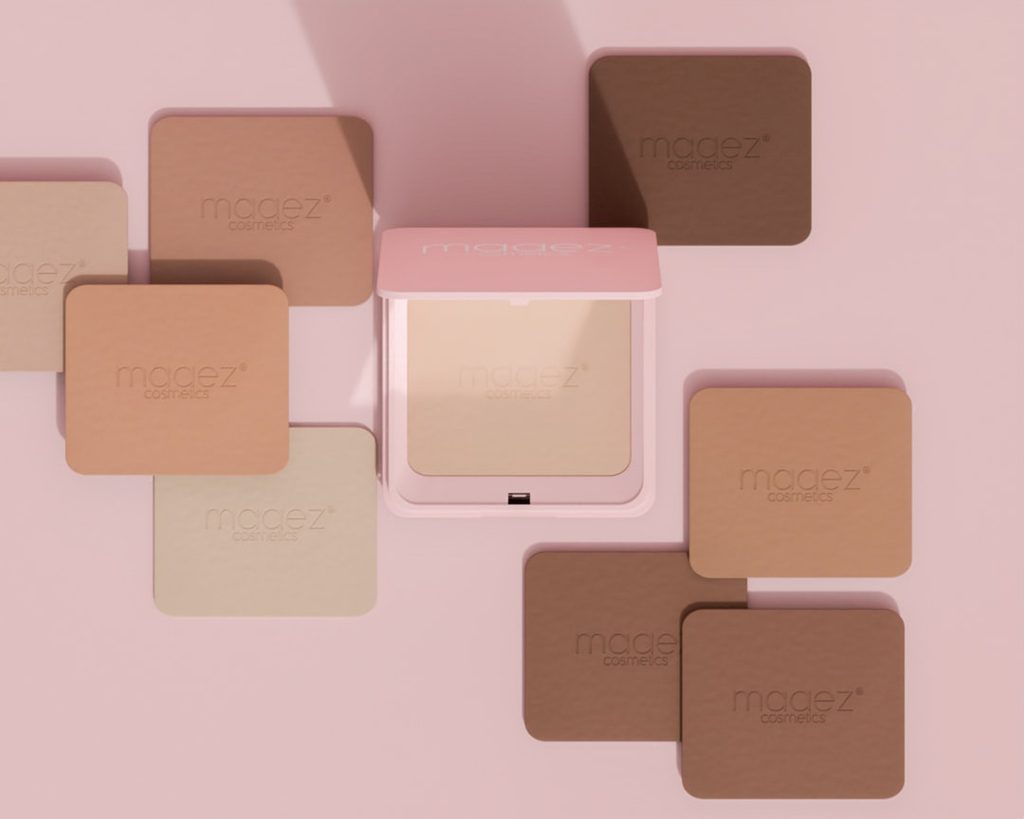
Photo by Firdaus Roslan · Unsplash
When I was working at a K-beauty shop, I got a lot of questions about cushion Foundations. The most common one by far was “Why does my cushion break down so fast?” The runner-up: “How do I pick the right shade number for my skin tone?”
Cushion foundation is a base makeup product that was developed and popularized by the Korean cosmetics industry — a compact that holds liquid foundation in a sponge or mesh. All you do is tap it on, which makes it wonderfully easy, but if you don’t know how to use cushion foundation properly, it’s surprisingly easy to end up with a base that slides off or looks heavy. So today I’m pulling together the things I found myself explaining to customers again and again: how to choose one, how to apply it naturally, and how to keep it from breaking down.
Choosing Your Cushion Shade — Don’t Trust the Back-of-the-Hand Test
The easiest place to go wrong with a cushion is shade selection.
- The back of your hand isn’t your face — In stores, people usually swatch on the back of the hand, but that skin is often a different color from the face (especially where it meets the neck). If you can, apply it right along your jawline or neck and check whether it blends in naturally.
- The same shade number varies by brand — “21,” for example, can run darker or lighter depending on the brand or the product line. Don’t go by the number alone — always test it on yourself.
- Indoor lighting and daylight are two different things — A shade can look perfect under store lights and still look off outside, so check it in natural light too if you can.
Match the Formula to Your Skin Type — Sponge vs. Mesh
Not all cushions are built the same. Even between two cushion compacts, the type of sponge inside and the thickness of the formula can make them feel very different on the skin.
- Standard sponge type — The most common format, where the product is soaked into a sponge.
- Mesh type — You press down on a mesh screen and the product comes up through it. Depending on the formula, mesh cushions can offer a lighter or more fluid-feeling application.
Which one suits you depends on your skin type, so try the tester before you buy and check both the texture and how it spreads. Dry skin usually does better with a hydrating, moisture-rich formula, while anyone dealing with shine tends to get along better with something lighter.
⭐ Applying It Naturally — Controlling the Amount Is Everything
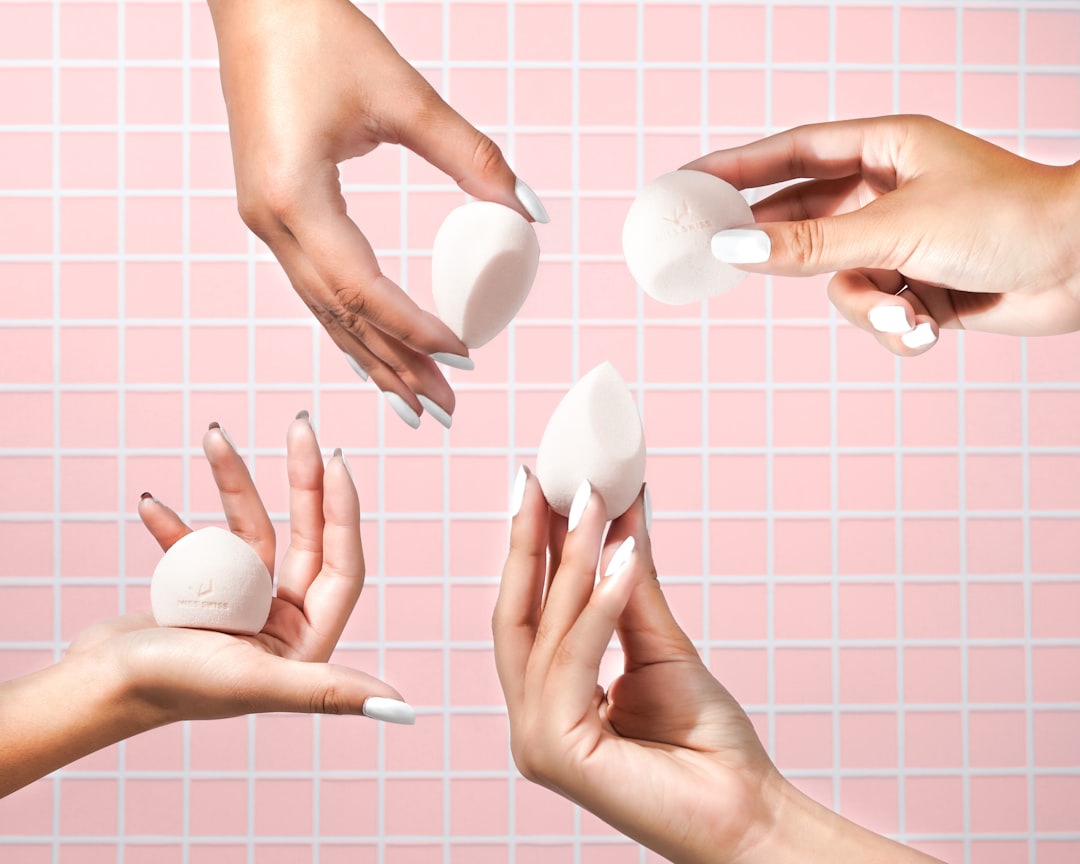
Photo by Ashley Piszek · Unsplash
Cushions are so convenient that it’s easy to overdo it, and picking up too much product at once is what makes a base look patchy or heavy. This was the technique I stressed most at the counter.
- Control the pressure when you press the puff in — Press hard and you’ll pick up way too much. Tap it lightly and take only what you need.
- Blot a little onto the inside of the lid — If the puff looks overloaded, press some off onto the inner surface of the lid to adjust the amount. That one small habit makes a huge difference in how natural the finish looks.
- Tap, don’t rub — Building up in thin layers with a tapping motion presses the product into the skin far more naturally than laying it on thick in one go.
- Thin, and start where you need it — Instead of coating your whole face, start thin in the center (cheeks, around the nose) where you actually want coverage, and blend outward.
⭐ Applying It Thick Makes Everything More Obvious
This applies to base makeup in general, not just cushions. The thicker you apply, the more your fine lines and texture can stand out.
- Around the eyes and smile lines — These areas move constantly, so a thick layer settles into the creases and makes them look sharper.
- Pores — Piling product on to cover them often ends up making pores look more noticeable, not less.
That’s why a thin, well-pressed-in layer looks better than total coverage. For spots that need more, it’s smarter to target them with concealer.
Oily Skin, Take Note — “Dewy” and “Greasy” Are Not the Same Thing
This was something I always made a point of explaining to customers. Looking dewy and looking greasy are two different things.
- If you have oily skin, or your skin is oily that day, and you apply a very hydrating cushion thickly, it won’t read as a dewy glow — it’ll read as shine.
- In that case, go with a lighter formula applied thinly, and lightly set only where you need it with powder across the T-zone, which is where shine shows up first.
The line between a dewy glow and a greasy one really comes down to which formula you choose and how much you apply.
Puff Hygiene — More Important Than You’d Think
One thing that’s surprisingly easy to overlook: puff hygiene. The puff touches your skin directly and picks up oil and dead skin, so leaving it unwashed isn’t great from a hygiene standpoint.
- Wash it regularly, and replace it when needed — If it’s dirty, smells, or still looks rough after washing, replace it. Wash it with a dedicated cleanser or a gentle soap, then let it dry completely before using it again.
- Keeping a spare puff and rotating them means you always have a clean one while the other dries.
- These days there are all sorts of tools designed to help your makeup along, including the thick puffs known in Korea as “hwajal-meok” puffs (roughly, “makeup goes on well” puffs). It’s worth experimenting with accessories like these. Just keep in mind that each one applies and absorbs product a little differently, so it’s worth finding the one that works for you.
If Your Cushion Keeps Breaking Down
When someone tells me their base “disappears so fast,” it’s usually a few causes stacked on top of each other:
- Applying cushion right after putting on too much skincare
- Applying the cushion too thick
- Using a very hydrating formula heavily on areas that are already oily
When that’s happening, the fix usually isn’t more product. Start by checking the basics: let your skincare absorb fully before makeup, keep the cushion thin, and lightly set the T-zone with powder. Getting your skin’s condition sorted for the day comes first — the same point I made in my post on glass skin makeup.
Popular Cushions — For Reference Only
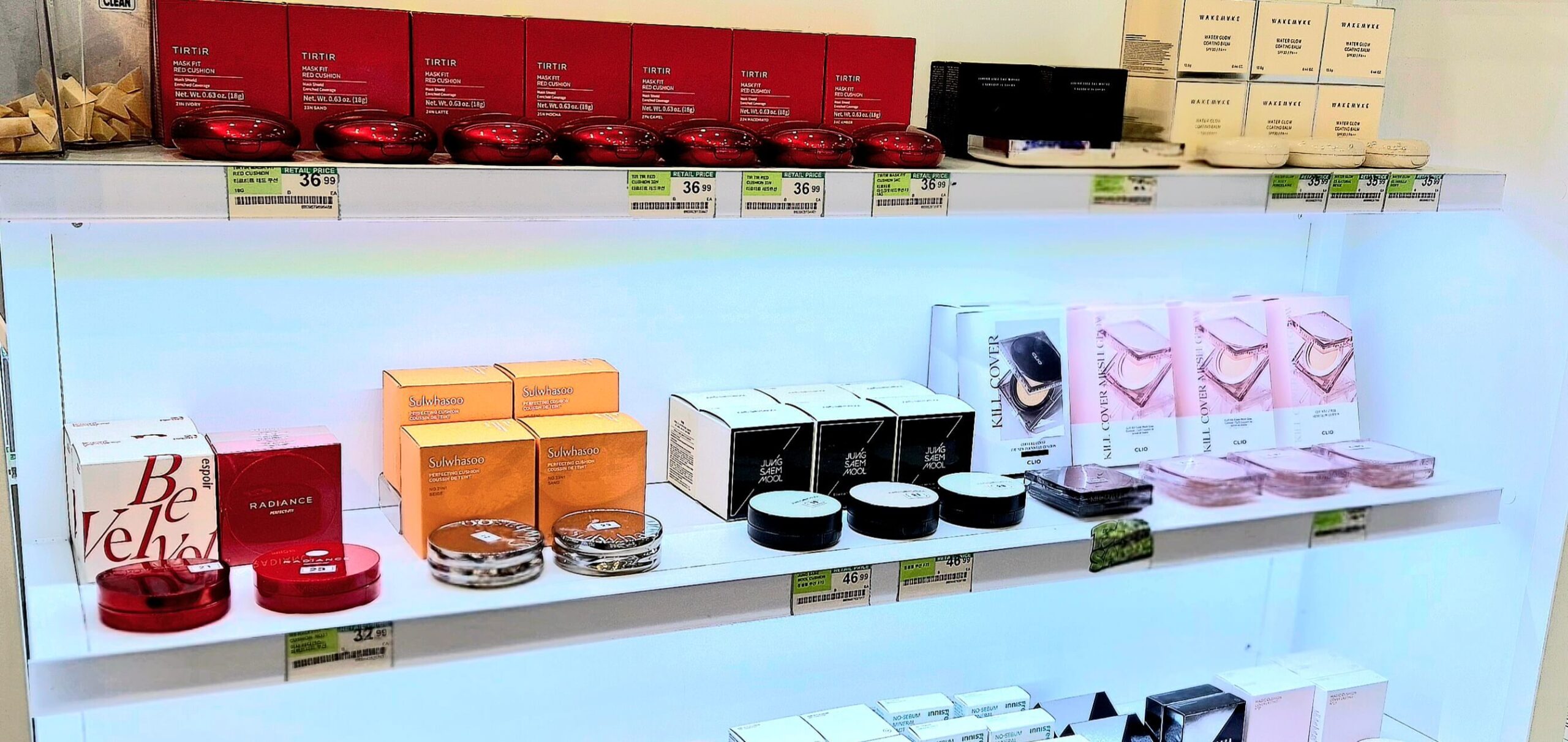
Here are a few products customers asked about often, purely as reference points. Everyone’s skin type and tone are different, so treat the list below as examples only and test before you commit.
- Jung Saem Mool cushion — Consistently brought up for its natural finish.
- TIRTIR cushion — The shade range is very extensive, so it covers a wide variety of skin tones, which is a big part of why it’s popular globally.
- CLIO mesh cushion — Worth a look if you’re curious how a mesh-type cushion feels. That said, the actual hydration and coverage can vary depending on the specific line and your own skin.
One more time, because it matters: popular doesn’t mean right for you. Checking the shade, the formula, and the feel yourself is the surest way to avoid a miss.
Wrapping Up
Cushions are convenient, and if you remember just three things — thin layers, amount control, and hygiene — you’ll get a much more natural result. Pick a cushion that suits your skin tone and works with your skin type, control your pressure and tap it on thinly, and keep the puff clean. Sticking to those basics alone will go a long way toward preventing breakdown and that heavy, cakey look. Rather than aiming for flawless coverage, aim for a base that lets healthy-looking skin show through — it’s a much prettier finish.
This article is for general informational purposes. How cosmetics and makeup feel and perform can vary from person to person. Discontinue use if you experience irritation.