
Photo by Grant Sams · Unsplash
When I worked at a beauty shop, snail mucin products were always steady sellers — they never went out of style. But here’s the funny part: most customers buying them had no real idea why they liked them so much. People would just grab the “snail cream” off the shelf saying, “Everyone says this is good, right?”
They loved the results, but what the ingredient actually is and how it works on skin was surprisingly unclear to most people. So today, from an esthetician’s point of view, I want to break down the real snail mucin benefits — what it actually is, why it feels so hydrating, and how to use it properly.
What Exactly Is Snail Mucin?
Snail mucin is, quite literally, purified secretion from snails. On ingredient lists, you’ll usually see it labeled as “Snail Secretion Filtrate.”
It’s not a single, isolated compound — it’s more accurate to think of it as a complex ingredient derived from snail secretion, containing multiple substances. The exact composition can vary depending on the source and processing method, but research has reported the presence of components like glycoproteins, hyaluronic acid, allantoin, and glycolic acid.
Why Is Snail Mucin So Hydrating? (The Real Snail Mucin Benefits)

Photo by Aleksandrs Karevs · Unsplash
In my experience on the shop floor, there was one reason customers kept coming back for snail mucin: it’s hydrating, and that hydration lasts.
This comes down to its composition. Snail mucin contains hyaluronic acid along with several other components that may help with moisture retention and surface protection. Because of this combination of components, snail mucin products tend to feel moisturizing and leave a soft, cushiony finish on the skin.
- Hydration — this is the benefit snail mucin is best known for. It’s commonly used to add moisture back into dry skin.
- Soothing — many formulas also contain allantoin, a long-established soothing ingredient, alongside the mucin itself.
- Texture and elasticity — there is research linking snail secretion to skin barrier function, elasticity, and texture, but current studies don’t support claiming that every snail mucin product delivers the same results. That’s why I tend to describe it as an ingredient that can support hydration and smoother texture, rather than promising “skin regeneration.”
Bottom line: the core snail mucin benefit is hydration that replenishes moisture and actually lasts. Everything else is worth keeping an eye on, but best treated as a bonus rather than a guarantee.
Who Does Snail Mucin Work Best For?
Here’s what I observed working directly with customers:
- Dry and mature skin — this was the group that loved snail mucin the most, especially customers in their 40s and beyond. The rich, moisturizing texture suited dry skin well, and sales noticeably picked up during seasonal transitions and in winter.
- Combination or oily-but-dehydrated skin — these days, younger customers use it a lot too. For people with an oily surface but dehydration underneath, lighter, water-based snail mucin formulas got great feedback.
- Sensitive skin — snail mucin content alone isn’t enough to judge whether a product will irritate your skin. If you’re sensitive, it’s more important to look at the product’s full formula, added fragrance and other ingredients, and your own skin’s condition rather than just the snail mucin percentage.
- Oily skin or anyone who dislikes heavy textures — this group tended to have more mixed reactions. That’s why I always recommended testing the product on your skin first — snail mucin comes in everything from light essences to thick, heavy creams, so texture varies a lot by product.
In the end, it matters less what the ingredient is and more whether your skin feels comfortable with that particular texture. (I go deeper into how to choose products in this guide to picking skincare products.)
When Should You Apply Snail Mucin in Your Routine? (Before or After)

Photo by Aleksandrs Karevs · Unsplash
This trips a lot of people up. The honest answer is: it depends on the formula.
- Watery essence or serum textures → apply after toner, before heavier creams. For example, with something like COSRX’s Advanced Snail 96 Mucin Power Essence, the product’s own usage instructions place it after toner. This follows the general skincare rule of applying products from thinnest to thickest.
- Thick, cream-textured formulas → these go later in your routine, as one of the final moisturizing steps.
One tip: applying it while your skin is still slightly damp after cleansing (not fully dry) can make it spread more smoothly for some people. (If you’re unsure about the order of essence, serum, and ampoule, check out this essence vs. serum vs. ampoule guide.)
Can You Use Snail Mucin With Other Skincare Ingredients?
Since snail mucin is primarily a hydrating ingredient, it’s often formulated alongside other active skincare ingredients. It’s common to see it paired with niacinamide, hyaluronic acid, vitamin C, and retinoids.
That said, it’s worth paying more attention to the irritation potential of whatever active ingredients you’re pairing it with rather than the snail mucin itself. Combining retinoids, high-concentration vitamin C, and exfoliating acids all at once can increase the risk of irritation regardless of the snail mucin.
Is Snail Mucin Cruelty-Free? A Common Question
This comes up more often than you’d think. The truth is, snail mucin harvesting methods are not the same across every brand. Some production methods are known to stimulate snails to secrete mucin before collecting it, but the industry as a whole doesn’t follow one standardized process. So it’s not accurate to assume that “snail mucin” automatically means “cruelty-free.” If this matters to you, the most reliable approach is to check the brand’s own disclosed sourcing methods and cruelty-free policy directly before buying.
What I Saw Behind the Counter
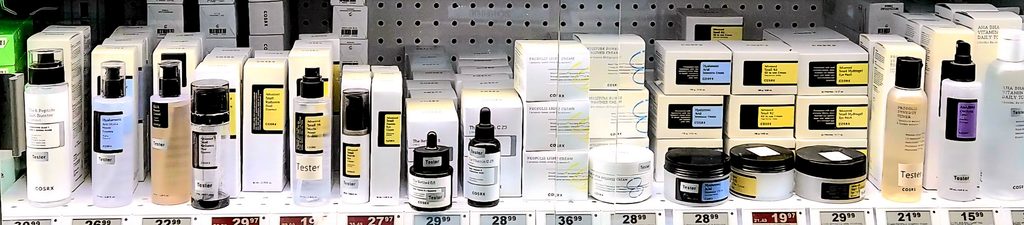
As I mentioned, snail mucin was a steady seller that especially picked up during seasonal transitions and winter. Customers dealing with dryness — often in their 40s and older — would come back to repurchase, saying it felt “cushiony and stayed moisturizing for a long time.”
These days, COSRX’s Advanced Snail 96 Mucin Power Essence is one of the best-known snail mucin products. It’s formulated with 96.3% Snail Secretion Filtrate, and its official ingredient list also includes sodium hyaluronate, allantoin, and panthenol. In my experience, lightweight essence formulas like this one tended to get positive feedback from people dealing with combination or dehydrated skin, who described it as “light, but without that tight feeling afterward.” If you want to check the full ingredient list and usage instructions for this specific product, you can find it on the COSRX Advanced Snail 96 Mucin Power Essence official page.
What I always told customers came down to one thing: don’t shop by ingredient name alone — pay attention to whether your skin actually likes that hydration and texture. That’s why I always encouraged people to test it first.
Frequently Asked Questions (FAQ)
Q. Can I use snail mucin if I have acne-prone or breakout-prone skin? A. Containing snail mucin doesn’t make a product a treatment for acne or breakouts. Lightweight essence formulas may feel less heavy than richer creams, depending on the formula, but for breakout-prone skin, it’s important to look at the full formula and ingredient list, not just the snail mucin. If breakouts are severe, it’s best to consult a dermatologist.
Q. I have oily skin — won’t this feel too heavy? A. It depends entirely on the formula. Choosing a lighter essence-type product will feel less heavy. If a thicker cream texture feels too much, there’s no need to force yourself to use it.
Q. Can I use it every day? A. Unless a product’s instructions say otherwise, many snail mucin essences and creams designed for hydration are made for daily use. That said, if it’s a new product for you, it’s smart to watch how your skin reacts as you introduce it.
Q. Snail mucin vs. hyaluronic acid — which is better? A. Both are used for hydration, but they work a bit differently. Hyaluronic acid is a well-known hydrating ingredient that helps skin hold onto moisture, while snail mucin is a complex ingredient containing multiple substances, which can give a somewhat cushier feel depending on the product. Neither is objectively “better” — it comes down to the texture you prefer and what your skin needs.
Final Thoughts
Snail mucin isn’t some mysterious “miracle snail ingredient” — it’s more accurately described as a complex ingredient that can help replenish moisture and keep skin feeling comfortable and hydrated. If your skin runs dry or feels dehydrated underneath, it can be a great fit, especially during drier seasons.
Next time you’re picking a snail mucin product, don’t choose it just because “it’s snail, so it must be good.” Instead, ask yourself: does my skin feel comfortable with this hydration and texture? That’s the real way to use this ingredient well.
Sources & Further Reading
- Mayo Clinic Press — The truth about snail mucin for skin care
- Singh et al., Journal of Cosmetic Dermatology (2024) — Snail extract for skin: A review of uses, projections, and limitations
- Rashad et al., Journal of Cosmetic Dermatology (2025) — From Nature to Nurture: The Science and Applications of Snail Slime in Health and Beauty
- Journal of Clinical and Aesthetic Dermatology (2020) — Efficacy and Safety of a New Cosmeceutical Regimen Based on the Combination of Snail Secretion Filtrate and Snail Egg Extract to Improve Signs of Skin Aging
This article is for general informational purposes only and is not medical advice. If you have persistent or severe skin concerns, please consult a dermatologist.