
Photo by Christian Agbede · Unsplash
For a while, I used an oil cleanser because I believed “oil cleansing dissolves blackheads and is great for pores.” But even after rinsing, my face seemed to have this slippery, filmy feeling left behind (even when nothing was actually still there), so I always finished with a foam cleanser for that squeaky-clean, fresh feeling — and I loved it enough to make double cleansing a daily habit.
Lately, though, I keep hearing “you don’t really need to go that far.” And honestly, a lot of customers who were just as confused as I once was would ask me, “Do I really need to do oil cleansing AND foam cleansing?” So today I want to break down the common myths and facts around oil cleansing and double cleansing — and how to actually do it right.
Myth 1: “Oil cleansing dissolves and removes blackheads”
This is the most common misconception. The basic principle behind oil cleansing is “like dissolves like” — oil-based ingredients help dissolve and lift oily residue such as makeup, sebum, and sunscreen, making it easier to rinse away. So it can help loosen and remove sebum, makeup, and sunscreen residue that builds up throughout the day.
But the idea that oil cleansing “melts away” blackheads that have already formed is an overstatement. Blackheads are a type of comedone — caused by sebum and dead skin cells clogging pores — and simply cleansing away surface oil doesn’t make an existing blackhead disappear instantly. Oil cleansing can help with prevention and mild improvement by keeping surface sebum in check, but reviews note that clinical evidence supporting the specific benefits of oil cleansing alone is still limited.
If blackheads are a real concern for you, look into products containing ingredients used for pore care, like salicylic acid (BHA). (I go into more detail on pores and blackheads in my guide on large pores.) And try to avoid rubbing or pressing at your skin with your hands trying to squeeze out “sebum plugs” — that tends to cause more irritation than it solves.
Myth 2: “Your skin should feel squeaky-clean after washing”
That squeaky feeling I used to chase with my foam cleanser finish? Turns out that’s myth number two.
That tight, squeaky feeling after cleansing isn’t a sign of a proper cleanse — it can actually be a sign of over-cleansing, where your skin has been stripped more than it needed to be. Experts tend to worry less about double cleansing itself and more about over-cleansing in general, since excessive cleansing can strip the skin barrier and lead to tightness, dryness, and irritation.
A properly cleansed face shouldn’t feel tight and squeaky — it should feel fresh but comfortable. If your skin feels seriously tight after washing, that can be a sign your cleanser is too strong or that you’re cleansing too much. (If your barrier feels compromised, my guide on repairing a damaged skin barrier is worth a read.)
Myth 3: “Everyone needs to double cleanse every single day”
Short answer: no. And the idea that “you don’t need to do it anymore” is, for the most part, actually correct.
Based on guidance from dermatologists, daily double cleansing isn’t essential for most people — a single thorough cleanse with a gentle cleanser is often enough. Double cleansing isn’t really a daily rule so much as an optional step for specific situations.
Who actually needs double cleansing — and who can skip it
Photo by Steven Ungermann · Unsplash
- Double cleansing can help when: you’re wearing makeup, using a water-resistant sunscreen, or you just feel like your usual single cleanse isn’t fully removing residue that day. (For more on removing sunscreen, check my sunscreen guide.)
- Be cautious or skip it if: you have dry or sensitive skin, or conditions like eczema or rosacea. In these cases, daily double cleansing can actually make dryness and irritation worse, so it’s worth approaching carefully.
In other words: on nights when you’ve worn makeup or a water-resistant sunscreen — products a single cleanse won’t fully remove — double cleansing is worth considering. On other days, depending on your skin condition and the cleanser you use, a single gentle cleanse may be all you need. That’s the realistic rule of thumb.
How to actually use an oil cleanser (the real reason behind that slippery feeling)
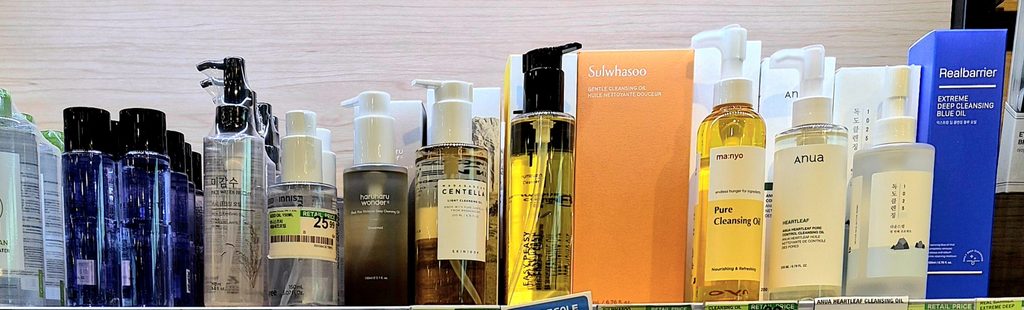
That slippery residue I used to feel — it turns out that in most cases, it comes down to skipping the “emulsify” step. Here’s how to use an oil cleanser properly:
- Start with dry hands and a dry face. Unless the product specifically says otherwise, starting dry is standard. If water gets on your hands or face too early, the cleanser may begin emulsifying before it has had a chance to properly dissolve and lift makeup and sunscreen.
- Use enough product and massage gently. Using too little just creates unnecessary friction. Massage in soft, circular motions.
- ⭐ Emulsify — this is the key step. Wet your fingertips with a little water and keep massaging — the oil will turn milky white. That’s the emulsified state. Once it turns milky, rinse thoroughly to remove the cleanser along with the dissolved makeup, sunscreen, and oil. If emulsification or rinsing is incomplete, that’s when you’re left with a slippery residue.
- Rinse thoroughly with lukewarm water. Avoid hot water, which can irritate the skin barrier.
- (If needed) follow with a second cleanse. Gently massage a mild water-based cleanser (foam or gel) onto your skin, rinse with lukewarm water, and pat your face dry with a towel instead of rubbing.
In short, that slippery feeling from oil cleansers usually isn’t because “it’s oil” — it’s because emulsification and rinsing weren’t thorough enough. Do both properly, and you can minimize that unwanted residue.
Do you need to double cleanse in the morning too?
For most people, no. It depends on what you used the night before and your skin type, but morning double cleansing usually isn’t necessary. You generally don’t have makeup or sunscreen to remove in the morning, so a lukewarm water rinse or a single gentle cleanser is often enough. Deep cleansing matters more at night, when a full day’s buildup needs to come off. If you have dry or sensitive skin, one gentle cleanse in the evening may be all you need.
Looking back at my own routine
Looking back, my double cleansing habit was really built on two misunderstandings. The slippery feeling wasn’t because the oil was bad — it was because I wasn’t emulsifying properly. And my obsession with that squeaky-clean feel was actually tipping me toward over-cleansing. Here’s where I’ve landed now: double cleanse (and emulsify properly!) on evenings when I’ve worn makeup or a water-resistant sunscreen, and just cleanse once on lighter days or in the morning. And I’ve stopped judging a good cleanse by whether my face feels “squeaky” — now I judge it by whether it feels comfortable.
Frequently Asked Questions (FAQ)
Q. Can I just do oil cleansing and skip the second step? A. It depends on the product. If it emulsifies well with water and rinses clean with no residue, a single cleanse may feel like enough. On the other hand, if you’ve worn makeup or a water-resistant sunscreen and feel like a single cleanse isn’t fully removing it, you can follow up with a mild water-based cleanser.
Q. I have oily/acne-prone skin — won’t oil cleansing make it worse? A. Oil cleansing itself doesn’t treat acne. It can be used to gently remove sebum, makeup, and sunscreen, but if you have acne-prone skin, it’s important to pay attention to the product’s formula, ingredients, and how your skin reacts afterward. The key is emulsifying thoroughly so no oily film is left behind.
Q. I have dry/sensitive skin — is it okay to double cleanse every day? A. I wouldn’t recommend it daily. Sensitive or dry skin is more prone to over-cleansing, so it’s best to double cleanse only on days you need to (like when wearing makeup) and stick to one gentle cleanse otherwise. If your skin feels very tight after washing, that’s a sign to cut back.
Q. Shouldn’t my skin feel squeaky-clean after washing? A. Your skin should feel fresh and comfortable — not tight or squeaky. Severe tightness can actually be a sign of over-cleansing.
Final Thoughts
Oil cleansing and double cleansing aren’t rules you have to follow no matter what — they’re something you adjust based on your skin’s condition that day and what you’ve put on it. Double cleanse (and emulsify properly!) on evenings with makeup or a water-resistant sunscreen, and stick to a single cleanse when you don’t need the extra step. And remember — the goal of cleansing isn’t a “squeaky-clean” feeling, but skin that’s clean and comfortable without irritation. That’s really all you need to keep in mind.
Sources & Further Reading
- Cleveland Clinic — Double Cleansing Method Explained: Should You Try It?
- American Academy of Dermatology (AAD) — Face Washing 101
- CeraVe — What Is Double Cleansing?
- Healthline — Double Cleansing: FAQs on Skin Type, Benefits, How-To
This article is for general informational purposes only and is not medical advice. If you have persistent or serious skin concerns, please consult a dermatologist.