
Photo by Olga Thelavart · Unsplash
Every time I spend a long day outdoors, my skin lets me know about it. My face feels tight after cleansing, and even a toner I normally love ends up stinging. Hours of sun, wind, and dry air leave my skin so reactive that almost anything I put on it starts to feel like too much.
When this happens, a lot of people reach for “something stronger” — an extra serum, a shiny new product. But as an esthetician, what I’ve learned is the opposite: the more irritated your skin is, the more you should be subtracting, not adding. Today I want to walk through the gentle, low-irritation sensitive skin care routine I turn to — especially on those days when my skin gets temporarily sensitized.
First — ‘Naturally Sensitive’ vs. ‘Temporarily Sensitized’ Skin
These two look similar but call for slightly different approaches.
- Sensitive skin: skin that tends to react easily — with stinging, redness, or discomfort — to certain products or environmental changes.
- Temporarily sensitized skin: skin that’s normally fine but becomes reactive for a while due to over-exfoliation, strong active ingredients, or exposure to sun, wind, and dry air.
What I deal with after a long day outside is almost always the second kind. But here’s the important part: whichever type you’re dealing with, the core rule in the moment is the same — reduce irritation, and focus on hydration and soothing. If you want to go deeper on skin barrier health, I’ve written more about it in my skin barrier repair guide.
My Own Story — Even My Toner Stings
On evenings after a long day outdoors, my face feels unusually tight after cleansing, and products I normally use without issue start to sting. On days like this, I sometimes reach for a hydrogel mask because I personally like the cooling, soothing feel. It’s not an essential step, though — if my skin is actively stinging, I may skip masks altogether and keep the routine even simpler. Instead of trying anything new, I stick to hydrating and soothing products only.
One thing I almost always reach for is a simple hydrating serum with hyaluronic acid — nothing fancy, just something to replenish moisture. Hyaluronic acid is a humectant — it helps draw in and hold onto moisture. That said, how it actually feels and whether it causes any irritation depends on the full formula, not the ingredient alone. I finish with a moisturizer that isn’t too heavy. (I’ve listed the specific soothing and moisturizing products I reach for further down.)
The More Sensitive Your Skin, The More You Subtract — 3 Core Rules

Photo by Anita Austvika · Unsplash
- Give potentially irritating actives a break. Retinoids, high-strength vitamin C, and AHA/BHA exfoliating acids are better left out of your routine while your skin is sensitized.
- Cut down your steps. Keep it simple: cleanse, moisturize, and add only what your skin already tolerates. Don’t layer product after product.
- Don’t start new products now. If you introduce something new while your skin is already reactive and it flares up, you won’t know what actually caused it. Save new products for once your skin has calmed down, and add them one at a time.
My Gentle Daily Sensitive Skin Care Routine
Morning
- Gentle cleanse — on some mornings, lukewarm water alone may be enough. If you use a cleanser, choose a mild, fragrance-free formula.
- Hydration — if my skin feels tight, I use a simple hydrating product I already know my skin tolerates. I don’t add multiple layers.
- Moisturizer — apply a comfortable moisturizer to help reduce moisture loss.
- Sunscreen — protecting your skin from further sun exposure is especially important when it’s already irritated. Choose one that feels comfortable and doesn’t sting. (For tips on picking one, see my sunscreen guide.)
Evening
- Gentle cleanse — wash away the day’s buildup and irritation softly, with lukewarm water instead of hot.
- Hydration and soothing, kept simple — same approach as the morning, centered on soothing ingredients.
- Moisturizer or a repair cream — finish with a moisturizing step to support overnight recovery.
On the Really Bad Days — My ‘Soothing Rescue’ Method
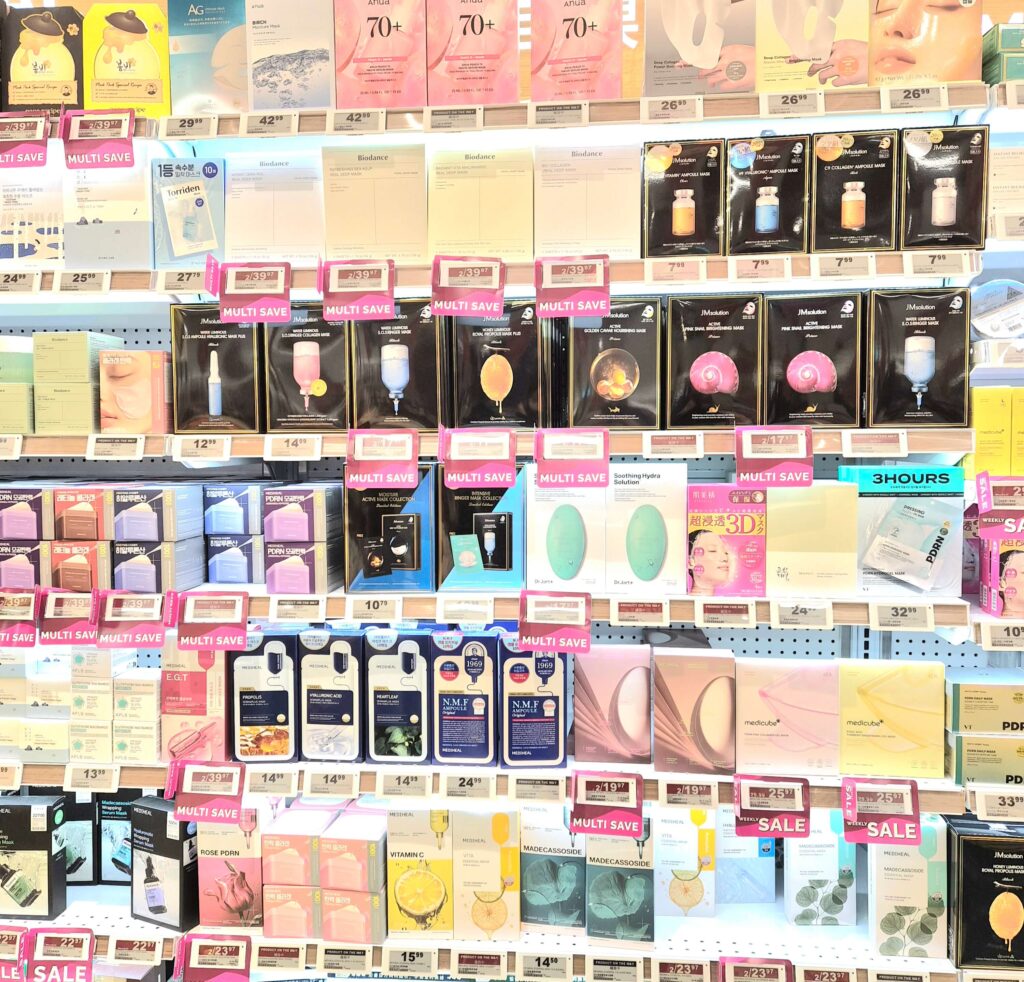
On especially irritated days, here’s what I do. This comes straight from my own hands-on experience.
- I sometimes reach for a gel-type mask. On sensitive days, I personally tend to choose a hydrogel mask because it sits close to the skin and doesn’t move around as much. Even the friction from a regular fabric sheet mask can feel like too much on a really irritated day. That said, a mask is not a mandatory step. Adding one more product can itself be irritating, so if your skin is stinging, skipping the mask and sticking to basic moisturizing is a perfectly good choice.
- I sometimes use a little more moisturizer than usual. On very dry days, I may apply a slightly more generous layer of a moisturizer my skin already knows and tolerates. I don’t treat this as a required step, and I always follow the product’s directions.
- I stick to the recommended wear time. If I use a mask, I follow the time listed on the packaging rather than leaving it on longer. Leaving a mask on for too long can make the experience less comfortable, especially if the mask begins to dry.
- I apply as gently as possible. If even applying product feels irritating, I avoid rubbing or pressing hard and instead smooth it on lightly with my palms. I use only as much as I need and keep unnecessary friction to a minimum.
- If it still stings, I stop. If even a soothing product feels like it’s stinging, I don’t add anything more that day. I keep the routine minimal and give my skin a chance to settle.
What to Avoid When Your Skin Is Sensitized
- Overloading on actives — don’t stack retinoids, high-strength vitamin C, and exfoliating acids while your skin is sensitized.
- Frequent exfoliation — pause physical scrubs and frequent peels for now.
- Hot water cleansing — stick to lukewarm water; hot water can make tightness worse.
- Strong fragrance or other potentially irritating ingredients — be especially cautious on sensitive days.
- Rubbing while cleansing or drying — pat gently, both when cleansing and when drying your face with a towel.
Ingredients That Help With Soothing and Hydration
What matters isn’t that an ingredient is “automatically effective” — it’s whether it suits your skin’s current state. Here are the ingredients I personally watch for on sensitized days:
- Hyaluronic acid — a humectant that helps draw in and hold moisture. Key on days when my skin feels tight.
- Panthenol (pro-vitamin B5) — commonly used for soothing and moisturizing.
- Centella Asiatica (cica) and madecassoside — ingredients with a long history of use and research around soothing. (See my cica ingredient guide.)
- Ceramides and squalane — help support the skin’s oil-moisture balance and hydration.
Products I’ve Actually Reached For
Below are three products I’ve personally reached for when my skin feels dry, irritated, or temporarily sensitized. This is based on my own experience, and results can vary depending on your skin. I don’t use all three at once — I choose based on what my skin needs that day.
- La Roche-Posay Cicaplast Baume B5+ — When specific areas feel particularly dry or irritated, I reach for this richer balm and apply a thin layer. It contains panthenol and madecassoside and has a more protective, occlusive feel.
- Dr.G R.E.D Blemish Clear Soothing Cream — When I want something lighter, this is one of the soothing moisturizers I reach for. I prefer it on days when my skin feels sensitive but doesn’t need a particularly rich cream.
- AESTURA Atobarrier 365 Cream — When dryness and moisture retention are my main concerns, I reach for this cream. Its formula includes squalane, ceramide NP, and cholesterol, making it a good fit for the barrier-focused approach I prefer on dry, sensitive days.
You don’t need all three. On a sensitized day, I’d rather use one moisturizer my skin already knows and tolerates than introduce several products at once.
Note: how a product feels and whether it irritates you can vary from person to person, and even day to day depending on your skin’s condition. If you’re trying a new product while your skin is sensitized, it’s best to patch-test on a small area first before applying it more broadly. (That said, a small patch test going fine doesn’t guarantee there will be no reaction when used on your whole face.)
When to See a Dermatologist
If soothing care at home isn’t helping, or if any of the following apply, don’t try to tough it out alone — see a dermatologist:
- Redness, stinging, or pain that’s severe or lasts more than a few days
- Unusual reactions like oozing, significant swelling, or blistering
- No improvement even after simplifying your routine as much as possible
FAQ
Q. I have sensitive skin — should I just never exfoliate? A. I’d recommend pausing it while your skin is sensitized. Once your skin has calmed down and stabilized, you can carefully reintroduce exfoliation, starting at a low frequency with a gentle method. The key is adjusting based on how your skin is responding.
Q. My sunscreen stings too — can I just skip it? A. If your sunscreen is stinging, you don’t need to force yourself to keep using it. If the product you’re using is causing irritation, stop using it, and once your skin has stabilized, consider trying a different texture or filter type. If you need to be outside, other forms of sun protection — such as a hat, an umbrella, or staying in the shade — can help too.
Q. When can I start trying new products again? A. Once signs of sensitization like stinging or tightness have settled down, introduce new products one at a time, slowly. That way, if a reaction does happen, you’ll actually know what caused it.
Final Thoughts
Caring for sensitive skin — and for skin that’s temporarily sensitized — isn’t about finding a “stronger” product. It’s about reducing irritation, focusing on hydration and soothing, and giving your skin time to recover. On days when you’re worn out from being outdoors, ease up on irritation and focus on basic moisturizing and soothing — and above all, subtract, don’t add. When your skin is sensitized, start by touching it less and layering less. Giving your skin time to feel comfortable again is part of skincare too.
This article is for general informational purposes only and is not medical advice. If irritation or breakouts are severe or persistent, please consult a dermatologist.