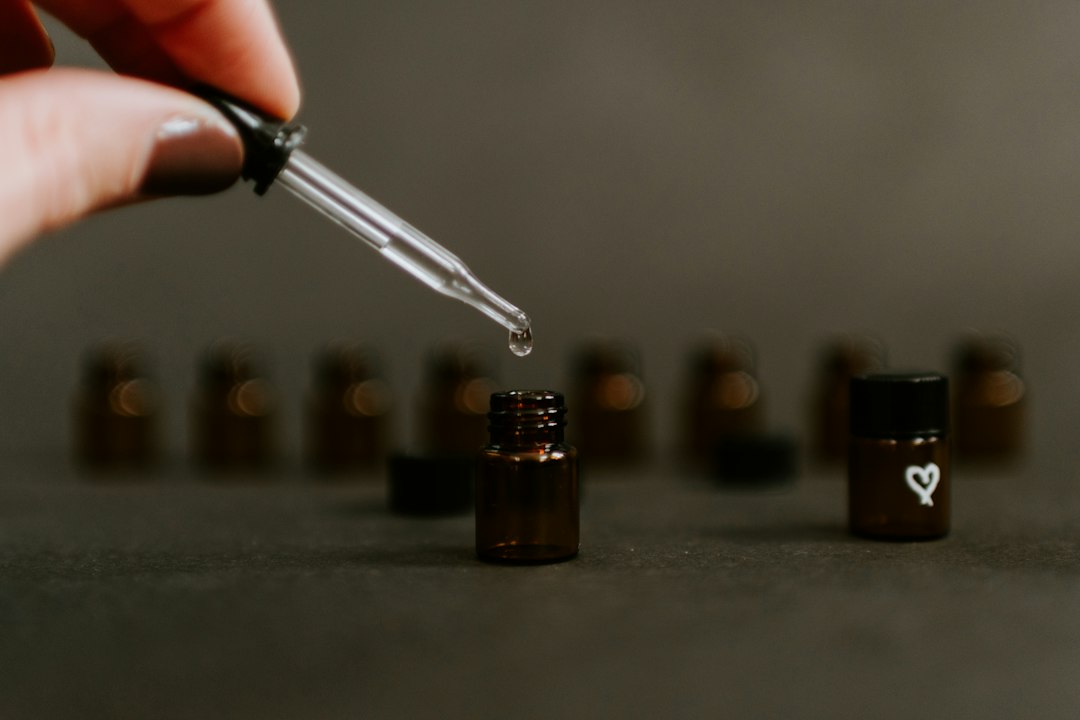
Photo by Kelly Sikkema · Unsplash
One word kept coming up in K-beauty this year: exosomes. Until last year, it was mostly something you heard about at dermatology clinics and in-office treatments. Now exosomes in skincare are everywhere, with a flood of serums and ampoules labeled “contains exosomes.” Since I studied esthetics, my first reaction was, “Wait, they’re putting this in something you just rub on your face?” That got my attention. But the more I read, the more clearly things split into two piles: the parts that are genuinely promising, and the parts you should still be careful about. Today I want to go through both honestly.
What are exosomes?
Exosomes are tiny sacs that cells release to the outside. They’re very small, usually in the range of tens of nanometers (roughly 30 to 150nm), and they carry things like proteins, lipids, growth factors, and genetic material (such as mRNA). The easiest way to picture them is as the delivery boxes cells use to send signals to each other.
Exosome-related ingredients in skincare can come from different sources, including material obtained from stem cell culture media and plant-derived materials. The source and manufacturing process can vary from one product to another. Researchers in the skin and beauty field have been trying to use exosomes in work on skin recovery and aging for a while now, and some studies have paired them with procedures like lasers or microneedling. Building on that research, cosmetics that put exosomes front and center have started showing up. But a clinic procedure and a topical product deliver ingredients in completely different ways, so you shouldn’t expect the same level of results.
Why did exosomes blow up in 2026?
For the past few years, the big K-beauty buzzword has been “regeneration.” At the center of that was PDRN, better known as salmon DNA, and exosomes are being treated as the next big thing after it. They sit in the same broad regeneration and anti-aging trend, but the idea of cell-to-cell signaling is new and genuinely interesting, which is part of why exosomes got so much buzz.
Beauty trend reports and media coverage have highlighted PDRN and exosomes as ingredients to watch in 2026. From here on, though, it’s important to separate what’s trendy from what’s proven.
Do exosomes in skincare actually work?
This is the part I most wanted to write. With this much hype comes a lot of exaggeration, so I’ll stick calmly to what’s known so far.
Fact 1. It really is a scientifically interesting ingredient. The role exosomes play in cell signaling and tissue repair is an active research topic in regenerative medicine. This is not some made-up ingredient.
Fact 2. But the human evidence for topical products is still thin. Much of the data out there comes from test-tube, preclinical, or small-scale studies, or from using exosomes as a supporting step to help recovery after a procedure. Honestly, as things stand, there isn’t enough large-scale clinical evidence to say they clearly improve healthy skin when you apply them.
Fact 3. Absorption and delivery are still open questions. Exosomes are nano-sized particles, but being small doesn’t automatically mean they can cross a healthy skin barrier and reach the layer where they’d need to work. How well exosomes are delivered in a topical product, and what they actually do there, can vary with the formula and the raw material, and the evidence confirming this in human skin is still limited. Just like with PDRN, it helps to remember that “the ingredient is in the bottle” and “it works properly inside your skin” are two different things.
Fact 4. Regulation and labels matter too. The US FDA has never approved any exosome product for dermatologic or cosmetic use. Products that claim to be exosome treatments or therapies especially need to be checked for safety and efficacy, and the FDA has issued a safety notice about unapproved exosome products (FDA safety notification). That said, whether a topical product is regulated can depend on its ingredients, intended use, and marketing claims. So the words “contains exosomes” on a label don’t guarantee a product is safe or effective.
Put simply, exosomes aren’t a scam ingredient, but they aren’t a miracle regeneration ingredient either. The most accurate way to see them right now is as an ingredient with big potential whose evidence as a topical product is still being built.
So when are they worth considering?
- If you’re interested in aftercare following a dermatology procedure. Some studies are looking at using exosomes alongside lasers, microneedling, and similar treatments. It’s hard to call this an established, standardized recovery routine yet, though, so it’s important to check the procedure method and whether the product is safe and approved.
- If you’re shopping for hydrating or soothing products. Exosome-focused products are an option, but the effect of the exosomes themselves isn’t well proven. If your skin is sensitive or your barrier is compromised, it’s more realistic to start with something gentle that has proven hydration.
- If you want to try a new regenerative ingredient with lowered expectations. Treat it as one supporting ingredient rather than expecting dramatic change, and you’ll be less likely to end up disappointed.
On the other hand, if your skin is already healthy and you don’t have any particular concerns, don’t rush out for expensive exosome products. Sticking to the basics (cleansing, moisturizing, sun protection) comes first.
Exosomes vs. PDRN
Both get filed under regeneration and anti-aging, but they’re not the same kind of ingredient.
PDRN stands for polydeoxyribonucleotide, a DNA-derived ingredient that became widely known in beauty and skincare before exosomes did. Even so, the evidence for PDRN also depends on where it comes from, how it’s formulated, and how it’s used, so you can’t judge its effects or safety by the ingredient name alone. (I covered it in more detail in my PDRN ingredient post.)
Exosomes are a type of extracellular vesicle involved in signaling between cells. Research and product launches are busy in the beauty world, but the source materials and delivery methods vary a lot and the human evidence is limited, so there’s still plenty to watch for.
It’s less about which one is better. Think of it this way: PDRN is the ingredient that got known in beauty first, and exosomes are the newer one on the rise.
How to pick an exosome product
If you really want to try one, look at these before you look at the marketing copy.
- Don’t choose based on “contains exosomes” alone. Check where they come from (stem cell culture medium, plant-derived, etc.) and look at the formula as a whole.
- Watch out for exaggerated medical claims. Take definitive lines like “wrinkles disappear” or “regenerates your skin” with a grain of salt.
- Check that the basics are solid. If the formula has well-built hydrating and soothing ingredients beyond the exosomes, you’re less likely to end up with a dud.
- Always patch test new products. This goes double for regenerative or high-performance ingredients, so try a small amount first.
Frequently asked questions
Q. I heard exosomes are made from stem cells. Are they safe? The exosome-related ingredients used in cosmetics vary by product. Some use material obtained during the cell culture process, and that doesn’t mean there are living stem cells in your cosmetic. What matters is where the ingredient comes from, how it’s made, and the quality control behind it. I’d recommend choosing a product from a brand you trust and patch testing anything new.
Q. Is an exosome treatment at a clinic the same as an exosome skincare product? No. The delivery method and conditions are completely different. Exosome-related products may be used in clinical settings in different ways, such as injections, alongside microneedling, or after laser treatments. These approaches vary, and their safety and regulatory status should be checked carefully. Those conditions aren’t the same as a cream or serum you put on at home, so you can’t apply the results of procedure studies directly to everyday home-care products. For injections or any procedure that breaks the skin especially, check whether the product is approved and safe, and talk to a medical professional.
Q. Should I buy exosomes or PDRN? Which one to choose depends on the product’s overall formula and your own skin concerns. With both PDRN and exosomes, it’s better to look at the evidence behind the product and what you’re using it for, rather than judging by the ingredient name. With exosomes in particular, keep in mind that the human evidence for topical products is still limited.
Where exosomes stand right now
Exosomes in skincare are genuinely interesting, and I’m curious to see where they go. But right now we’re at the stage where the hype is running ahead of the evidence. So instead of taking the marketing at face value, the smartest move is to keep your expectations reasonable. The newer an ingredient is, the more it pays to skip the flashy promises and take your time figuring out whether it actually suits your skin. That’s what protects your skin in the end.